

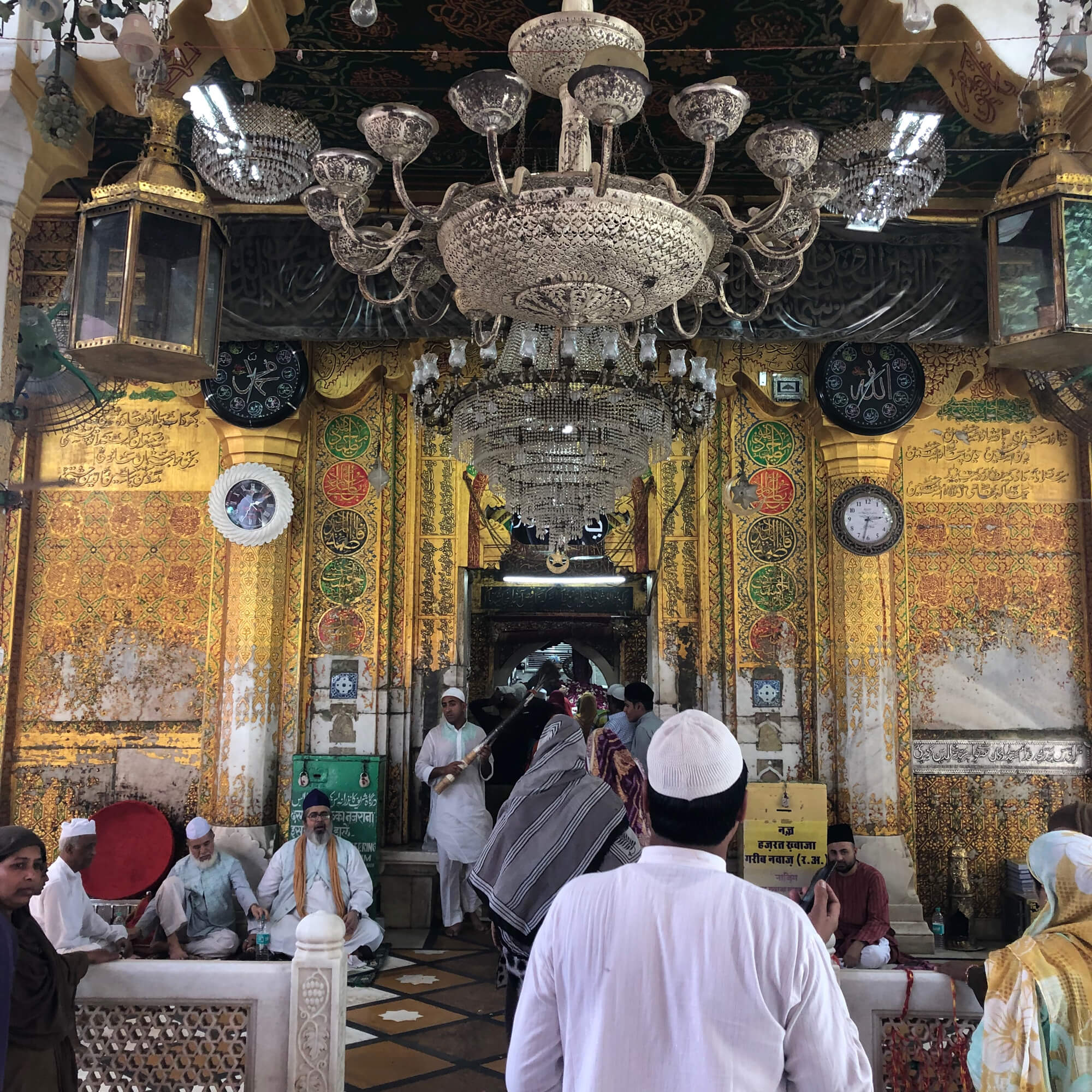
Rajasthan became the center of Sufis with the establishment of Chishti saint Khwaja Moinuddin Chishti in Ajmer.
The role of Sufis of Rajasthan is undeniable in giving a practical framework for composite culture and shared understanding.
Early Chishti saints kept them away from state matters, and they rejected gifts from state or any other kind of favor.Their beliefs of social service, non-violence and humanity became core of their teachings.
An open kitchen (Langar) turned into a consistent element of khanqah life in medieval India. The Chishti saints cited the following hadis for their practice: “if someone visits a living man and gets nothing from him to eat; it is as if he had visited the dead”.
Shaikh Hamiduddin Nagauri was a disciple of K hwaja Moinuddin Chishti. He lived a life of a farmer, and he kept a cow like ordinary villagers of Suwal. On his ascetic life, Khwaja bestowed the title of Sultan-ut-Tarikin (The King of recluses).
Nagauri was one of those saints who resisted against the materialistic lifestyle and questioned the Sufis relations with the state. Hamiduddin Nagauri gave up eating meat in respect of their fellow villagers, who were vegetarian and he also warned his disciples not to distribute meat preparations for the blessing of his soul. He was true follower of Ahimsa cult. He was very much influenced by his surroundings especially Jain community and it is believed that’s why he adopted the Ahimsa or non-violence.